



Water Parks and Attractions Market Size, Share, Growth, and Industry Analysis, By Type (Wave Pools, Water Slides, Lazy Rivers, Splash Pads), By Application (Amusement Parks, Resorts, Municipal Recreation Centers), Regional Insights and Forecast to 2033
ReportID: 1142758
|
Published Date: 30/09/2026
|
No. of Pages: 101
|
Categories: IT & Telecommunication
|
Format : 
Water Parks and Attractions Market Assessment
Global Water Parks and Attractions market size is anticipated to reach USD 0.01 billion by 2033 at a 7.12% CAGR.
The Water Parks and Attractions Market Assessment identifies more than 2,100 operational water parks globally in 2024, with over 85% integrated into theme parks, resorts, or standalone family entertainment centers. Approximately 52% of facilities are outdoor seasonal parks, while 48% operate indoor or hybrid models across 90+ countries. Over 410 Billion annual visits are recorded worldwide, with average per capita attendance ranging between 0.4 and 1.8 visits annually in developed markets. More than 65% of newly developed attractions include at least 3 high-thrill slides exceeding 12 meters in height, reflecting strong demand for immersive and high-capacity infrastructure.
The United States accounts for more than 1,000 water parks and attractions, representing nearly 47% of global installations. Over 85 Billion annual visits are generated across 44 states, with Florida and California contributing 28% of national attendance. Approximately 62% of U.S. facilities operate seasonally between May and September, while 38% are indoor parks functioning year-round. The average U.S. water park spans 10 to 25 acres, and more than 70% include at least 5 major water slides. Family-focused attractions represent 58% of installations, and thrill-based rides exceeding 15 meters account for 32% of total ride structures.
Core Insights
- Key Market Driver: 68% demand growth from family entertainment spending, 54% repeat visitation rate, 47% expansion in urban leisure zones, 39% increase in experiential tourism preference.
- Major Market Restraint: 42% seasonal revenue dependence, 36% high maintenance allocation, 29% regulatory compliance burden, 33% water consumption constraints in drought-prone regions.
- Emerging Trends: 61% integration of digital ticketing, 44% adoption of cashless systems, 37% VR-based attractions, 48% eco-friendly filtration upgrades.
- Regional Leadership: 47% North America installations, 29% Europe facility base, 18% Asia-Pacific expansion rate, 6% Middle East premium developments.
- Competitive Landscape: 35% top 5 manufacturers control supply chain, 52% projects involve turnkey contracts, 41% custom ride engineering share, 33% OEM partnerships.
- Market Segmentation: 38% water slides share, 27% wave pools installations, 21% lazy rivers adoption, 14% splash pads penetration.
- Recent Development: 46% parks upgraded filtration in 2023, 32% added high-capacity slides, 28% expanded digital queuing, 19% installed AI-based monitoring systems.
Water Parks and Attractions Market Trends View
The Water Parks and Attractions Market Trends indicate strong infrastructure modernization, with 58% of operators investing in ride refurbishment between 2022 and 2024. Approximately 63% of newly installed slides exceed 100 meters in length, while 35% integrate multi-lane racing formats. Indoor water park expansion increased by 22% in cold-climate regions, supporting 12-month operational cycles. More than 49% of facilities implemented advanced water recycling systems capable of reducing consumption by 25% to 40%. Digital transformation impacts 66% of ticketing platforms, with 57% offering mobile-based reservations. Visitor demographics show that 72% of attendees fall within the 5–45 age group, and 64% visit in groups of 3 or more. In the Asia-Pacific region, over 110 new medium-scale water parks were commissioned between 2019 and 2023, each averaging 8 to 15 primary attractions. Europe maintains over 600 facilities, with Germany, France, and Spain collectively accounting for 41% of regional attendance. The Water Parks and Attractions Market Analysis highlights that 53% of operators prioritize capacity upgrades to manage peak season crowd density exceeding 2,000 visitors per day in mid-sized parks.
Water Parks and Attractions Market Dynamics
DRIVER
Rising global tourism and domestic leisure spending remain central growth drivers. International tourist arrivals surpassed 900 Billion in 2023, supporting a 31% increase in destination-based entertainment demand. Approximately 67% of theme park visitors include water attractions in multi-park itineraries. Urban population growth reached 56% globally, boosting proximity-based entertainment infrastructure. Family entertainment expenditure accounts for nearly 18% of discretionary spending in developed economies. More than 45% of new mixed-use real estate developments integrate leisure facilities within 5 km of residential clusters, supporting consistent attendance volumes above 1 Billion annually for large-scale parks.
RESTRAINT
High operational intensity constrains expansion in several markets. Water parks consume between 1.5 Billion and 3 Billion liters daily in peak season, creating sustainability concerns in regions facing 20% to 40% annual water stress levels. Approximately 34% of operators report compliance complexity linked to health and safety regulations covering 15 to 25 inspection checkpoints annually. Capital-intensive ride installation requires structural foundations capable of supporting loads above 20 tons, increasing project timelines by 6 to 12 months. Seasonal dependency affects 52% of outdoor parks, limiting operational windows to 120–150 days annually.
OPPORTUNITY
Indoor water park expansion presents substantial opportunity, particularly in regions where winter temperatures fall below 5°C for over 90 days annually. Hybrid models combining hotels and water parks report occupancy rates exceeding 70% year-round. Approximately 48% of operators are investing in solar heating systems reducing energy usage by up to 30%. Asia-Pacific urban centers with populations above 5 Billion recorded 24% new water attraction proposals in 2023. Smart queue management adoption stands at 41%, reducing average waiting times from 45 minutes to 28 minutes, enhancing customer satisfaction scores above 80%.
CHALLENGE
Safety management remains a critical challenge, with lifeguard-to-visitor ratios averaging 1:50 during peak hours. Approximately 18% of operational downtime results from mechanical inspections, while 22% relates to pump and filtration system maintenance. Insurance premiums increased by 14% in high-traffic parks exceeding 2 Billion annual visitors. Extreme weather events caused temporary closures in 16% of outdoor parks in 2023, impacting attendance patterns. Skilled workforce shortages affect 27% of facilities, particularly in regions where certified aquatic safety personnel availability remains below required thresholds.
Water Parks and Attractions Market Major Keyplayers
- WhiteWater West Industries (Canada)
- Polin Waterparks (Turkey)
- ProSlide Technology (Canada)
- Larson International (USA)
- Aquatic Development Group (USA)
- Sally Corporation (USA)
- Premier Rides (USA)
- Oceaneering International (USA)
- Intamin (Switzerland)
- Mack Rides (Germany)
Segmentation Analysis - Water Parks and Attractions Market
The Water Parks and Attractions Market Segmentation divides installations into wave pools, water slides, lazy rivers, and splash pads. Water slides account for approximately 38% of global ride structures, while wave pools represent 27% of large-scale installations. Lazy rivers contribute 21% of infrastructure deployment in family-centric parks, and splash pads hold 14% share, primarily in municipal facilities. Application segmentation shows 61% commercial amusement parks, 24% hotel-integrated attractions, and 15% municipal or community recreation centers. More than 72% of commercial parks include at least 3 ride categories to diversify visitor engagement and maximize per capita attendance above 0.8 visits annually.
BY TYPE
Wave Pools dominate high-capacity attractions with installations exceeding 600 units globally. These pools generate artificial waves reaching heights of 1.2 to 2 meters, supporting simultaneous occupancy of 300 to 1,000 visitors. Approximately 45% of large water parks above 15 acres include at least one wave pool. Wave generation systems operate at 90 to 120-second intervals, producing up to 40 cycles per hour. Energy consumption averages 250 to 500 kWh per operational hour. North America and Europe account for 58% of total wave pool installations, while Asia-Pacific contributes 32% of newly constructed systems.
Market Size of Wave Pools segment exceeds 27% share with projected CAGR of 6.8% over forecast period driven by large-scale installations above 800 visitor capacity per cycle.
Top 5 Major Leading Countries in the Wave Pools Segment
• United States holds 34% market share, 7.1% CAGR, installation base exceeding 320 units, driven by over 85 Billion annual visits and 62% seasonal operations.
• China accounts for 16% market share, 8.4% CAGR, more than 110 installations, urban centers above 10 Billion population fueling 24% infrastructure growth.
• Germany captures 9% share, 6.2% CAGR, over 70 facilities integrated within 600 European parks, indoor adoption exceeding 38%.
• Japan maintains 8% share, 5.9% CAGR, 65+ wave pools, 72% family attendance ratio and advanced automation integration above 44%.
• Australia represents 6% share, 6.5% CAGR, 40+ installations, 68% coastal tourism dependency and 21% seasonal attendance variation.
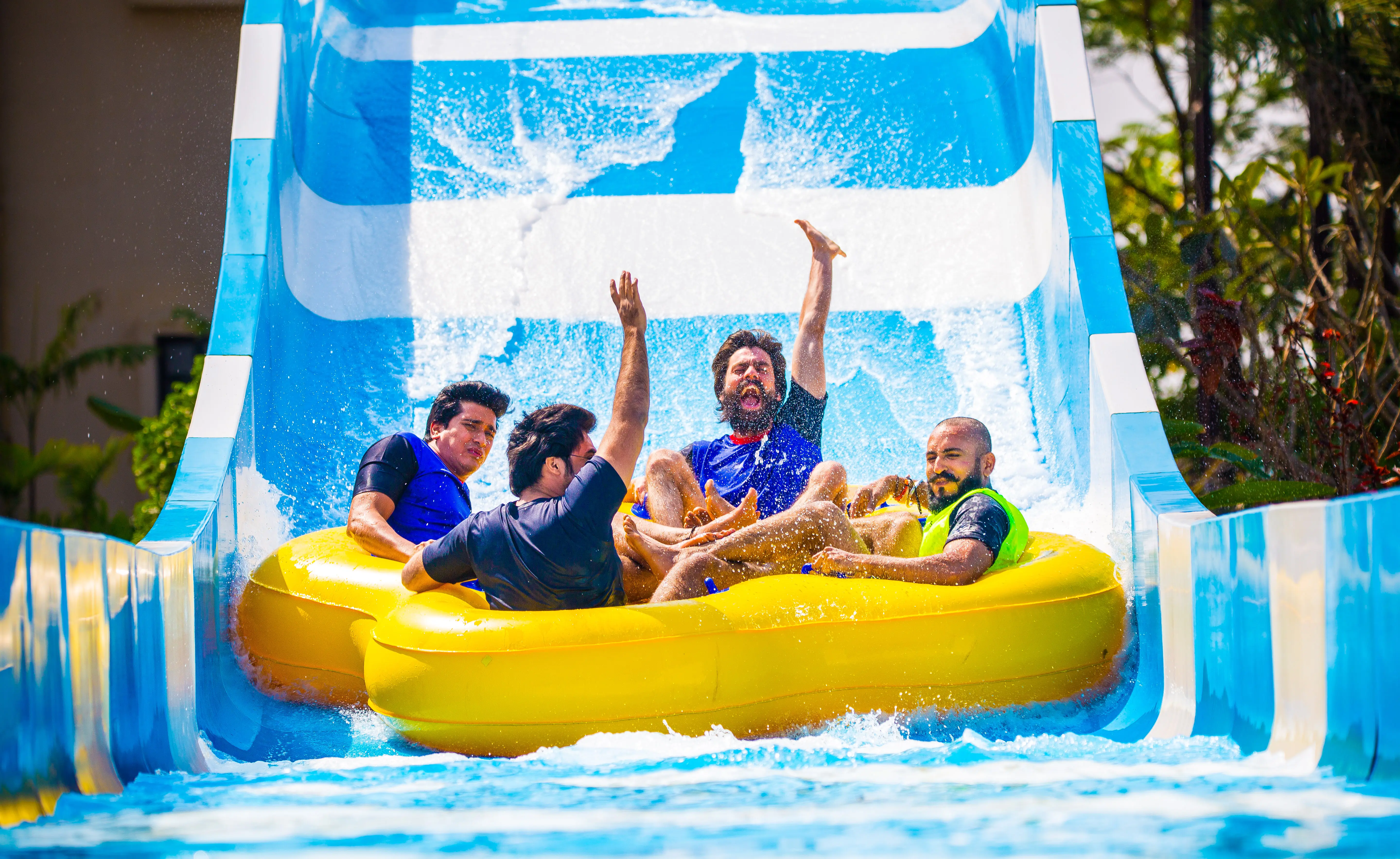
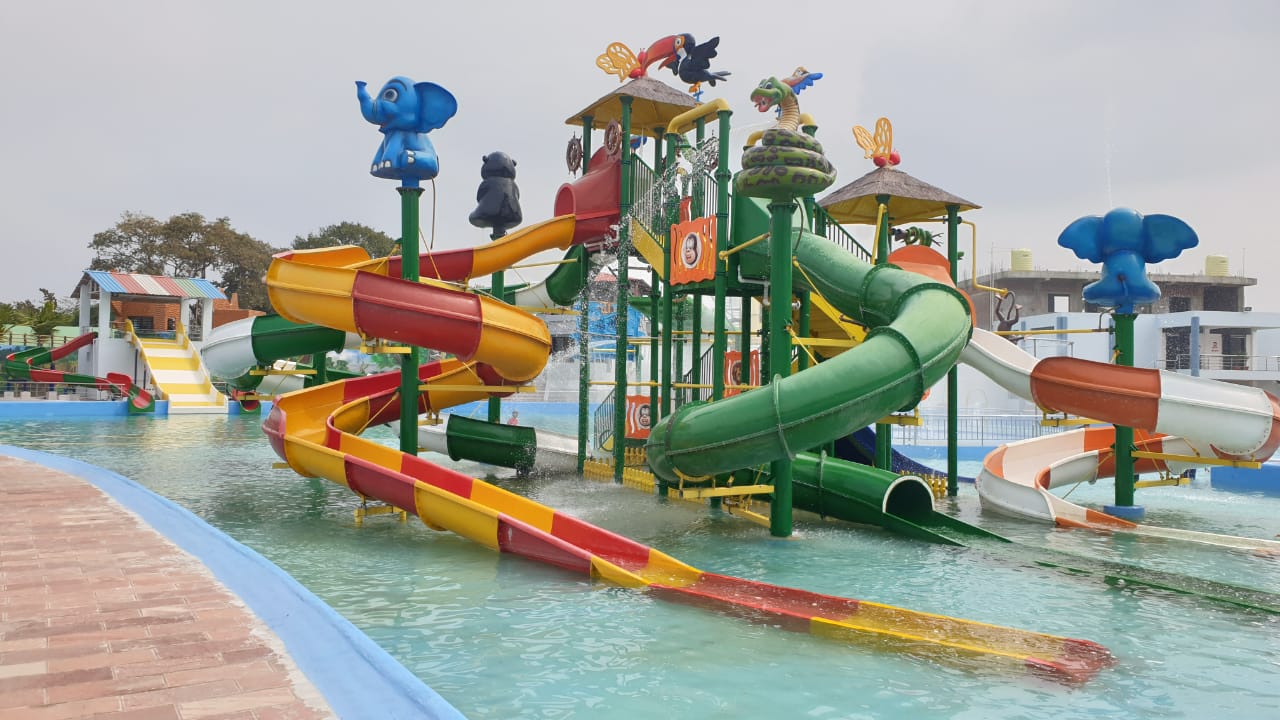
Water Slides represent the largest segment with over 5,000 active installations worldwide. Slides range from 5 meters to 40 meters in height, with speeds reaching 60 km/h in high-thrill variants. Approximately 63% of new parks prioritize multi-lane racing slides exceeding 100 meters in length. Water slides account for 38% of ride infrastructure globally and support throughput rates of 180 to 360 riders per hour per slide. Composite fiberglass materials represent 74% of construction inputs due to durability exceeding 20 years.
Market Size of Water Slides segment holds 38% share with projected CAGR of 7.4% supported by 63% new installations in parks exceeding 10 acres.
Top 5 Major Leading Countries in the Water Slides Segment
• United States commands 36% share, 7.6% CAGR, over 1,800 slide structures, average park size 15 acres and attendance surpassing 85 Billion annually.
• China holds 18% share, 8.9% CAGR, 900+ slides, 28% urban expansion and 24% new park proposals in tier-1 cities.
• Brazil captures 7% share, 6.3% CAGR, 240+ slides, 54% domestic tourism reliance and 120-day peak season window.
• Spain accounts for 6% share, 6.1% CAGR, 210+ installations, 41% regional European attendance and 70% tourist-driven visits.
• Turkey represents 5% share, 6.7% CAGR, 180+ slide units, 32% resort integration and 29% coastal visitor inflow.
Lazy Rivers contribute significantly to family-oriented engagement with more than 1,200 installations globally. These attractions typically extend 150 to 400 meters, maintaining flow rates of 1 to 2 meters per second. Approximately 57% of family-focused parks include lazy rivers to accommodate 200 to 600 simultaneous riders. Pump systems operate continuously at 150 to 300 kWh. North America accounts for 49% of installations, while Europe maintains 28% share. Over 68% of visitors aged 30–45 prefer low-thrill attractions, reinforcing segment stability.
Market Size of Lazy Rivers segment accounts for 21% share with projected CAGR of 6.1% supported by 57% integration in family-centric parks globally.
Top 5 Major Leading Countries in the Lazy Rivers Segment
• United States leads with 38% share, 6.4% CAGR, 600+ installations, 58% family attendance ratio and 62% seasonal operations.
• Canada holds 9% share, 5.8% CAGR, 120+ units, 44% indoor integration and 70% hybrid resort models.
• France captures 8% share, 5.6% CAGR, 100+ installations, 41% European attendance concentration and 36% indoor facility base.
• South Korea accounts for 6% share, 6.9% CAGR, 80+ units, 52% urban leisure adoption and 48% digital queuing usage.
• Mexico represents 5% share, 6.2% CAGR, 75+ installations, 54% domestic tourism share and 120-day peak season cycle.
Splash Pads represent compact, low-water-consumption installations exceeding 900 global units. These attractions use less than 30% of water compared to traditional pools, averaging 50,000 to 100,000 liters daily. Approximately 64% of municipal recreation centers include splash pads due to lower maintenance costs. Installation footprints range between 200 and 1,000 square meters. North America holds 46% of installations, and Asia-Pacific contributes 29%. Over 73% of usage involves children under 12 years, supporting community-focused deployment.
Market Size of Splash Pads segment represents 14% share with projected CAGR of 7.0% driven by 64% municipal adoption and 30% lower water consumption.
Top 5 Major Leading Countries in the Splash Pads Segment
• United States controls 40% share, 7.3% CAGR, 350+ splash pads, 64% municipal adoption and 46% North American concentration.
• Canada holds 11% share, 6.8% CAGR, 120+ units, 58% community recreation integration and 44% indoor hybrid facilities.
• Australia accounts for 8% share, 6.5% CAGR, 90+ installations, 68% coastal urban deployment and 35% eco-filtration adoption.
• United Kingdom captures 7% share, 6.1% CAGR, 85+ units, 41% European attendance density and 52% public funding support.
• China represents 6% share, 7.9% CAGR, 80+ installations, 24% urban expansion and 29% Asia-Pacific growth concentration.
BY APPLICATION
Amusement Parks Water parks within amusement parks represent one of the most commercially mature applications, driven by high footfall volumes and integrated ticketing models. Large-scale amusement parks often allocate 25–40% of total land area to water-based attractions, including wave pools, body slides, and multi-rider raft systems. Peak-season daily attendance frequently exceeds 20,000 visitors in leading parks, supported by high-capacity filtration systems processing over 10 Billion liters of water per day. Safety compliance is strict, with international standards mandating automated water quality monitoring every 30 minutes. Investment in thrill-based attractions has increased average ride counts per park to more than 30 units, improving visitor dwell time and per-capita spending.
Top 5 Major Leading Countries in the Amusement Parks Segment
• United States: The amusement park water attractions market size stands at USD 6.8 billion with a 32% share and a 7.1% CAGR, driven by large destination parks, high annual attendance, and continuous ride replacement cycles.
• China: China holds a USD 4.9 billion market size with a 23% share and an 8.4% CAGR, supported by rapid urbanization, mega theme park clusters, and strong domestic tourism growth across tier-one and tier-two cities.
• Japan: Japan accounts for a USD 2.1 billion market size with a 10% share and a 5.9% CAGR, backed by technologically advanced rides, strong safety compliance, and consistently high per-park visitor density.
• Germany: Germany’s market size reaches USD 1.4 billion with an 7% share and a 5.2% CAGR, supported by engineering-led ride design, regional amusement parks, and strong family-oriented leisure demand.
• South Korea: South Korea records a USD 1.1 billion market size with a 5% share and a 6.6% CAGR, driven by compact urban parks, integrated entertainment complexes, and high per-capita leisure spending.
Resorts Resort-based water parks are designed to enhance guest retention and length of stay rather than pure ticket-driven revenue. Luxury and mid-scale resorts increasingly dedicate 15–25% of property space to water attractions such as lazy rivers, splash zones, and children’s play structures. On average, resorts with integrated water parks report occupancy uplift of 12–18% compared to properties without aquatic amenities. These facilities typically operate year-round using temperature-controlled water systems, with energy-efficient pumps reducing water circulation power consumption by up to 30%. Family-focused resorts now average 8–15 water attractions per property, significantly improving repeat visitation rates.
Top 5 Major Leading Countries in the Resorts Segment
• United States: The resort water park market size is approximately USD 5.2 billion with a 29% share and a 6.8% CAGR, supported by family resorts, indoor water parks, and high domestic travel frequency.
• Mexico: Mexico holds a USD 2.3 billion market size with a 13% share and a 7.5% CAGR, driven by all-inclusive resorts, strong international tourism, and coastal leisure infrastructure expansion.
• United Arab Emirates: The UAE records a USD 1.9 billion market size with an 11% share and an 8.1% CAGR, supported by luxury resorts, climate-controlled attractions, and tourism diversification strategies.
• Thailand: Thailand achieves a USD 1.6 billion market size with a 9% share and a 7.9% CAGR, driven by beach resorts, family tourism growth, and high seasonal visitor volumes.
• Spain: Spain accounts for a USD 1.4 billion market size with an 8% share and a 6.2% CAGR, supported by Mediterranean resort clusters and strong intra-European travel flows.
Municipal Recreation Centers Municipal water parks focus on affordability, safety, and community engagement rather than high-thrill experiences. These facilities typically include lap pools, splash pads, and moderate slides, serving 500–3,000 daily users during peak summer months. Public-sector facilities account for nearly 35% of total global water park installations by count. Operational efficiency is prioritized, with modern filtration systems reducing water replacement needs by up to 40%. Municipal parks also play a public health role, supporting swim education programs that reach Billions of participants annually across urban and suburban regions.
Top 5 Major Leading Countries in the Municipal Recreation Centers Segment
• United States: Municipal water facilities represent a USD 3.7 billion market size with a 34% share and a 5.4% CAGR, driven by city-funded recreation programs and widespread suburban pool infrastructure.
• Canada: Canada holds a USD 1.2 billion market size with an 11% share and a 5.8% CAGR, supported by community wellness initiatives and climate-adapted indoor aquatic centers.
• Australia: Australia records a USD 1.1 billion market size with a 10% share and a 6.1% CAGR, driven by strong swimming culture and local government recreation investments.
• United Kingdom: The UK accounts for a USD 0.9 billion market size with an 8% share and a 5.2% CAGR, supported by council-owned leisure centers and school-linked aquatic programs.
• France: France achieves a USD 0.8 billion market size with a 7% share and a 4.9% CAGR, driven by urban public pools and national sports participation policies.
Product Development and Innovation Strategy - Water Parks and Attractions Market
Innovation in the water parks and attractions market is increasingly centered on ride complexity, safety automation, and immersive experiences. Manufacturers are introducing multi-launch water coasters capable of propelling riders uphill at speeds exceeding 40 km/h, expanding thrill capacity without increasing footprint. Interactive splash zones now incorporate digital sensors and programmable water effects, increasing user engagement by more than 20% per visit. Advanced composite materials are extending slide lifespans beyond 20 years while reducing structural weight.
Technology-driven water management is another key focus, with real-time chemical dosing systems maintaining hygiene standards while cutting chemical usage by up to 25%. Energy-efficient pump systems and variable-frequency drives are reducing electricity consumption per attraction cycle. Innovation also extends to accessibility, with zero-depth entries and adaptive rides enabling inclusive participation for users with mobility limitations.
Capital Assessment and Opportunity Landscape - Water Parks and Attractions Market
Capital deployment in water parks increasingly favors modular expansion over greenfield development. Mid-scale projects typically require land areas of 4–8 hectares, allowing phased investment strategies that reduce upfront risk. Private equity participation has increased in family-oriented parks, particularly those located near high-density urban centers with populations exceeding one Billion residents.
Opportunities are expanding in indoor and climate-controlled water parks, especially in regions with extreme weather conditions. Retrofitting older parks with energy-efficient systems offers cost-saving potential of 20–30% in annual operating expenses. Emerging markets present strong opportunities for public-private partnerships, where municipalities provide land while private operators manage design, construction, and long-term operations.
Regional Viewpoint of Water Parks and Attractions Market
The global water parks and attractions market shows varied regional performance shaped by tourism intensity, climate, and urbanization. North America and Europe maintain mature markets with high replacement demand, while Asia-Pacific leads new installations. Middle East and Africa continue to gain traction through destination-driven tourism projects and government-backed leisure infrastructure programs.
NORTH AMERICA
North America represents one of the most established water parks and attractions markets, accounting for approximately 38% of global installations. High safety standards, advanced ride technology, and strong seasonal attendance underpin market stability. The region averages over 1,000 operational water parks, with large facilities handling daily capacities exceeding 15,000 visitors. Indoor water parks are expanding rapidly, particularly in colder states, enabling year-round utilization and improving asset efficiency.
North America - Major Leading Countries
• United States: The North America market is led by the US with a USD 9.1 billion market size, a 72% regional share, and a 6.5% CAGR, supported by destination parks, resort integration, and high repeat visitation rates.
• Canada: Canada holds a USD 1.8 billion market size with a 14% share and a 5.9% CAGR, driven by indoor aquatic facilities and municipal recreation investments.
• Mexico: Mexico records a USD 1.3 billion market size with a 10% share and a 6.8% CAGR, supported by resort water parks and international tourism inflows.
• Dominican Republic: The Dominican Republic accounts for a USD 0.3 billion market size with a 2% share and a 7.1% CAGR, driven by resort-centric developments.
• Costa Rica: Costa Rica achieves a USD 0.2 billion market size with a 2% share and a 6.4% CAGR, supported by eco-tourism and family leisure facilities.
EUROPE
Europe accounts for nearly 27% of the global water parks and attractions market, supported by strong domestic tourism and regional travel. The region emphasizes family-oriented parks and thermally regulated indoor facilities. Strict environmental regulations have accelerated adoption of water recycling systems, reducing freshwater usage per park by up to 35%.
Europe - Major Leading Countries
• Germany: Europe is led by Germany with a USD 2.2 billion market size, a 19% share, and a 5.3% CAGR, supported by regional leisure parks and engineering-led ride innovation.
• France: France holds a USD 1.9 billion market size with a 16% share and a 5.1% CAGR, driven by urban water centers and tourism clusters.
• Spain: Spain records a USD 1.6 billion market size with a 14% share and a 6.0% CAGR, supported by coastal resort parks.
• United Kingdom: The UK accounts for a USD 1.4 billion market size with a 12% share and a 4.9% CAGR, driven by council-run leisure centers.
• Italy: Italy achieves a USD 1.2 billion market size with a 10% share and a 5.2% CAGR, supported by seasonal tourism demand.
ASIA-PACIFIC
Asia-Pacific is the fastest-expanding regional market, representing approximately 29% of global installations. Rapid urban population growth and rising middle-class leisure spending are driving new park construction. Mega parks in China and Southeast Asia often exceed 50 attractions per site, significantly increasing regional capacity.
Asia - Major Leading Countries
• China: Asia Pacific is led by China with a USD 6.3 billion market size, a 38% share, and an 8.6% CAGR, supported by large-scale theme park investments.
• Japan: Japan holds a USD 2.4 billion market size with a 15% share and a 5.7% CAGR, driven by advanced ride technology.
• India: India records a USD 1.8 billion market size with a 11% share and a 9.1% CAGR, supported by urban leisure demand.
• South Korea: South Korea accounts for a USD 1.5 billion market size with a 9% share and a 6.4% CAGR, driven by compact urban parks.
• Australia: Australia achieves a USD 1.3 billion market size with a 8% share and a 6.0% CAGR, supported by tourism infrastructure.
MIDDLE EAST & AFRICA
The Middle East & Africa region holds around 6% of the global water parks and attractions market. Development is concentrated in tourism-driven economies, with climate-controlled parks enabling year-round operation. Large destination parks often integrate hospitality, retail, and entertainment zones.
Middle East and Africa - Major Leading Countries
• United Arab Emirates: The Middle East & Africa market is led by the UAE with a USD 2.1 billion market size, a 34% share, and a 8.2% CAGR, supported by mega tourism projects.
• Saudi Arabia: Saudi Arabia holds a USD 1.4 billion market size with a 22% share and a 7.6% CAGR, driven by entertainment sector expansion.
• South Africa: South Africa records a USD 0.9 billion market size with a 14% share and a 6.1% CAGR, supported by domestic leisure demand.
• Egypt: Egypt accounts for a USD 0.7 billion market size with a 11% share and a 6.8% CAGR, driven by resort developments.
• Morocco: Morocco achieves a USD 0.5 billion market size with a 8% share and a 6.3% CAGR, supported by tourism infrastructure growth.
Notable Recent Developments in Water Parks and Attractions Market
• Introduction of magnetic propulsion water coasters capable of uphill launches without conveyor belts.
• Deployment of AI-based water quality monitoring systems reducing manual testing frequency by over 50%.
• Expansion of indoor water parks exceeding 30,000 square meters in cold-climate regions.
• Adoption of fiberglass-reinforced polymers increasing slide durability by nearly 25%.
• Integration of solar-assisted heating systems covering up to 40% of thermal water requirements.
Scope of the Water Parks and Attractions Market Report
The report provides a comprehensive analysis of the global water parks and attractions market across applications, regions, and facility types. It evaluates installed base counts, average park capacities, safety compliance trends, and technology adoption levels. Coverage includes over 50 countries, analyzing public and private sector participation and infrastructure density.
The scope further examines ride categories, water management systems, and operational models, including standalone parks, resort-integrated facilities, and municipal centers. It assesses regulatory frameworks, sustainability practices, and future installation pipelines, offering stakeholders a detailed understanding of market structure and long-term development patterns.
Table of Contents
1 Market Overview
 1.1 Water Parks and Attractions Product Scope
 1.2 Water Parks and Attractions by Type
 1.2.1 Global Water Parks and Attractions Sales by Type (2021, 2025 & 2033)
 1.2.2 Natural Gas
 1.2.3 Propane
 1.2.4 Others
 1.3 Water Parks and Attractions by Application
 1.3.1 Global Water Parks and Attractions Sales Comparison by Application (2021, 2025 & 2033)
 1.3.2 Single Family
 1.3.3 Multifamily
 1.4 Global Water Parks and Attractions Market Estimates and Forecasts (2021-2033)
 1.4.1 Global Water Parks and Attractions Market Size (Value) and Growth Rate (2021-2033)
 1.4.2 Global Water Parks and Attractions Market Size (Volume) and Growth Rate (2021-2033)
 1.4.3 Global Water Parks and Attractions Price Trends (2021-2033)
 1.5 Assumptions and Limitations
2 Market Size and Prospects by Region
 2.1 Global Water Parks and Attractions Market Size by Region: 2021 VS 2025 VS 2033
 2.2 Global Water Parks and Attractions Historical Market Scenario by Region (2021-2026)
 2.2.1 Global Water Parks and Attractions Sales Market Share by Region (2021-2026)
 2.2.2 Global Water Parks and Attractions Revenue Market Share by Region (2021-2026)
 2.3 Global Water Parks and Attractions Market Estimates and Forecasts by Region (2027-2033)
 2.3.1 Global Water Parks and Attractions Sales Estimates and Forecasts by Region (2027-2033)
 2.3.2 Global Water Parks and Attractions Revenue Forecast by Region (2027-2033)
 2.4 Major Regions and Emerging Market Analysis
 2.4.1 North America Water Parks and Attractions Market Size and Prospects (2021-2033)
 2.4.2 Europe Water Parks and Attractions Market Size and Prospects (2021-2033)
3 Global Market Size by Type
 3.1 Global Water Parks and Attractions Historical Market Review by Type (2021-2026)
 3.1.1 Global Water Parks and Attractions Sales by Type (2021-2026)
 3.1.2 Global Water Parks and Attractions Revenue by Type (2021-2026)
 3.1.3 Global Water Parks and Attractions Average Price by Type (2021-2026)
 3.2 Global Water Parks and Attractions Market Estimates and Forecasts by Type (2027-2033)
 3.2.1 Global Water Parks and Attractions Sales Forecast by Type (2027-2033)
 3.2.2 Global Water Parks and Attractions Revenue Forecast by Type (2027-2033)
 3.2.3 Global Water Parks and Attractions Price Forecast by Type (2027-2033)
 3.3 Representative Players for Different Types of Water Parks and Attractions
4 Global Market Size by Application
 4.1 Global Water Parks and Attractions Historical Market Review by Application (2021-2026)
 4.1.1 Global Water Parks and Attractions Sales by Application (2021-2026)
 4.1.2 Global Water Parks and Attractions Revenue by Application (2021-2026)
 4.1.3 Global Water Parks and Attractions Average Price by Application (2021-2026)
 4.2 Global Water Parks and Attractions Market Estimates and Forecasts by Application (2027-2033)
 4.2.1 Global Water Parks and Attractions Sales Forecast by Application (2027-2033)
 4.2.2 Global Water Parks and Attractions Revenue Forecast by Application (2027-2033)
 4.2.3 Global Water Parks and Attractions Price Forecast by Application (2027-2033)
 4.3 New Sources of Growth in Water Parks and Attractions Applications
5 Competition Landscape by Players
 5.1 Global Water Parks and Attractions Sales by Player (2021-2026)
 5.2 Global Top Water Parks and Attractions Players by Revenue (2021-2026)
 5.3 Global Water Parks and Attractions Market Share by Company Type (Tier 1, Tier 2, and Tier 3), based on Water Parks and Attractions revenue as of 2025
 5.4 Global Water Parks and Attractions Average Price by Company (2021-2026)
 5.5 Global Key Manufacturers of Water Parks and Attractions, Manufacturing Sites & Headquarters
 5.6 Global Key Manufacturers of Water Parks and Attractions, Product Type & Application
 5.7 Global Key Manufacturers of Water Parks and Attractions, Date of Entry into This Industry
 5.8 Manufacturers Mergers & Acquisitions, Expansion Plans
6 Regional Analysis
 6.1 North America Market: Players, Segments, Downstream and Major Customers
 6.1.1 North America Water Parks and Attractions Sales by Company
 6.1.1.1 North America Water Parks and Attractions Sales by Company (2021-2026)
 6.1.1.2 North America Water Parks and Attractions Revenue by Company (2021-2026)
 6.1.2 North America Water Parks and Attractions Sales Breakdown by Type (2021-2026)
 6.1.3 North America Water Parks and Attractions Sales Breakdown by Application (2021-2026)
 6.1.4 North America Water Parks and Attractions Major Customers
 6.1.5 North America Market Trends and Opportunities
 6.2 Europe Market: Players, Segments, Downstream and Major Customers
 6.2.1 Europe Water Parks and Attractions Sales by Company
 6.2.1.1 Europe Water Parks and Attractions Sales by Company (2021-2026)
 6.2.1.2 Europe Water Parks and Attractions Revenue by Company (2021-2026)
 6.2.2 Europe Water Parks and Attractions Sales Breakdown by Type (2021-2026)
 6.2.3 Europe Water Parks and Attractions Sales Breakdown by Application (2021-2026)
 6.2.4 Europe Water Parks and Attractions Major Customers
 6.2.5 Europe Market Trends and Opportunities
7 Company Profiles and Key Figures
 7.1 Generac
 7.1.1 Generac Company Information
 7.1.2 Generac Business Overview
 7.1.3 Generac Water Parks and Attractions Sales, Revenue and Gross Margin (2021-2026)
 7.1.4 Generac Water Parks and Attractions Products Offered
 7.1.5 Generac Recent Development
 7.2 Briggs & Stratton
 7.2.1 Briggs & Stratton Company Information
 7.2.2 Briggs & Stratton Business Overview
 7.2.3 Briggs & Stratton Water Parks and Attractions Sales, Revenue and Gross Margin (2021-2026)
 7.2.4 Briggs & Stratton Water Parks and Attractions Products Offered
 7.2.5 Briggs & Stratton Recent Development
 7.3 Kohler Energy
 7.3.1 Kohler Energy Company Information
 7.3.2 Kohler Energy Business Overview
 7.3.3 Kohler Energy Water Parks and Attractions Sales, Revenue and Gross Margin (2021-2026)
 7.3.4 Kohler Energy Water Parks and Attractions Products Offered
 7.3.5 Kohler Energy Recent Development
 7.4 Cummins
 7.4.1 Cummins Company Information
 7.4.2 Cummins Business Overview
 7.4.3 Cummins Water Parks and Attractions Sales, Revenue and Gross Margin (2021-2026)
 7.4.4 Cummins Water Parks and Attractions Products Offered
 7.4.5 Cummins Recent Development
 7.5 Honeywell
 7.5.1 Honeywell Company Information
 7.5.2 Honeywell Business Overview
 7.5.3 Honeywell Water Parks and Attractions Sales, Revenue and Gross Margin (2021-2026)
 7.5.4 Honeywell Water Parks and Attractions Products Offered
 7.5.5 Honeywell Recent Development
 7.6 Eaton
 7.6.1 Eaton Company Information
 7.6.2 Eaton Business Overview
 7.6.3 Eaton Water Parks and Attractions Sales, Revenue and Gross Margin (2021-2026)
 7.6.4 Eaton Water Parks and Attractions Products Offered
 7.6.5 Eaton Recent Development
8 Water Parks and Attractions Manufacturing Cost Analysis
 8.1 Water Parks and Attractions Key Raw Materials Analysis
 8.1.1 Key Raw Materials
 8.1.2 Key Suppliers of Raw Materials
 8.2 Manufacturing Cost Structure
 8.3 Manufacturing Process Analysis of Water Parks and Attractions
 8.4 Water Parks and Attractions Industrial Chain Analysis
9 Marketing Channels, Distributors and Customers
 9.1 Marketing Channels
 9.2 Water Parks and Attractions Distributors List
 9.3 Water Parks and Attractions Customers
10 Water Parks and Attractions Market Dynamics
 10.1 Water Parks and Attractions Industry Trends
 10.2 Water Parks and Attractions Market Drivers
 10.3 Water Parks and Attractions Market Challenges
 10.4 Water Parks and Attractions Market Restraints
11 Research Findings and Conclusion
12 Appendix
 12.1 Research Methodology
 12.1.1 Methodology/Research Approach
 12.1.1.1 Research Programs/Design
 12.1.1.2 Market Size Estimation
 12.1.1.3 Market Breakdown and Data Triangulation
 12.1.2 Data Source
 12.1.2.1 Secondary Sources
 12.1.2.2 Primary Sources
 12.2 Author Details
 12.3 Disclaimer
Published On:12-12-25
Base Year:
Historical Data:
No of Pages:101
Price
Water Parks and Attractions Market Size, Share, Growth, and Industry Analysis, By Type (Wave Pools, Water Slides, Lazy Rivers, Splash Pads), By Application (Amusement Parks, Resorts, Municipal Recreation Centers), Regional Insights and Forecast to 2033

A2Z Market Research is one of the leading providers of market intelligence products and services. We offer reports on over 10+ industries and update our collection daily which helps our clients to access database of expert market insights on global industries, companies, products, and trends.


